Why notate shape?
(Why notate anything?)
When anyone wishes to convey and preserve musical structures, or verbal compositions, there are ways to articulate them in a symbolic notation – i.e. define elements from which to create syntactic structure, and generate organising principles that confer comprehensibility on the message.
This frees the user from reliance on the arbitrary and one-off, a situation where any choice is possible, but in which there is no reason for choosing any particular one. Instead it offers the possibility of an open-ended organic system that is coherent and comprehensible.
· A link (axis) of given length (defined by its relative length and its place in the linkage)
· Sense and amount of movement
· Change of length
· Duration (if dynamic – or virtual duration if static)
· Colour
· Trace type (contour, swept area etc.)
These have their symbolic expression, which can be passed on to a performer (who may be the composer him/herself at a later time, or even a machine…)
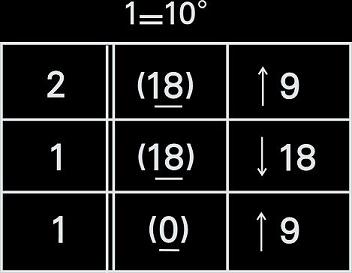
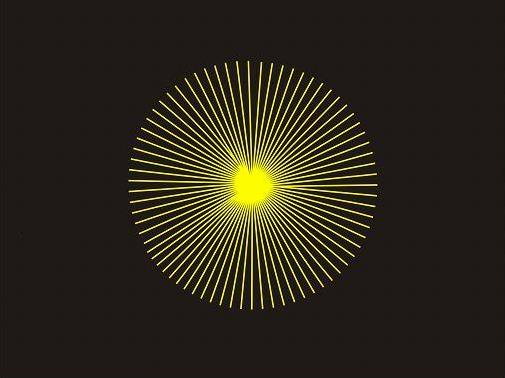
A single generating element, a line moving round one of its ends, traces a circle.
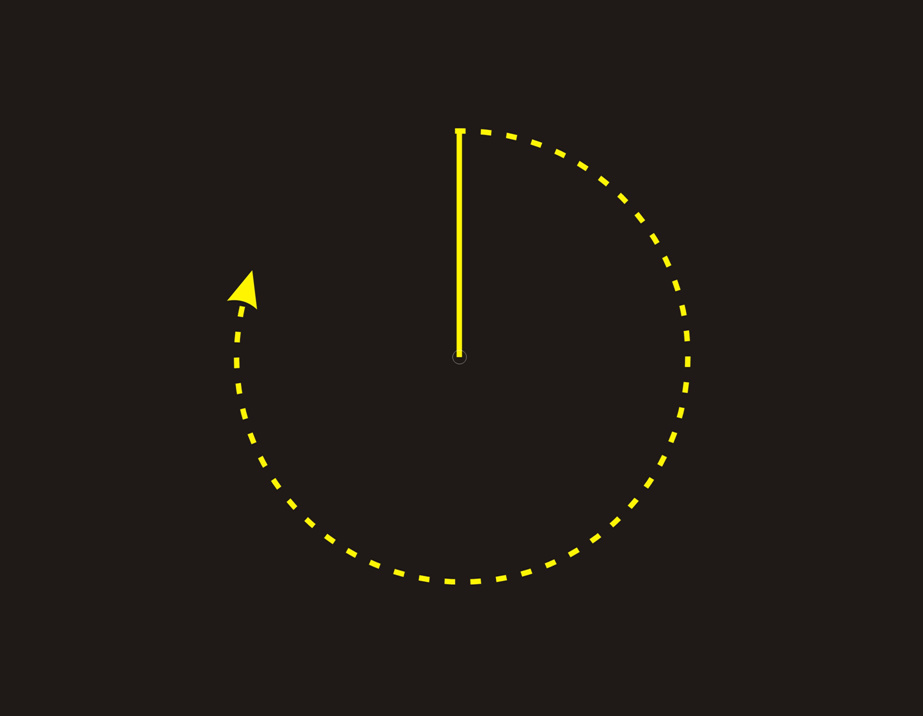
This may be displayed as the circular trace of its distal end:
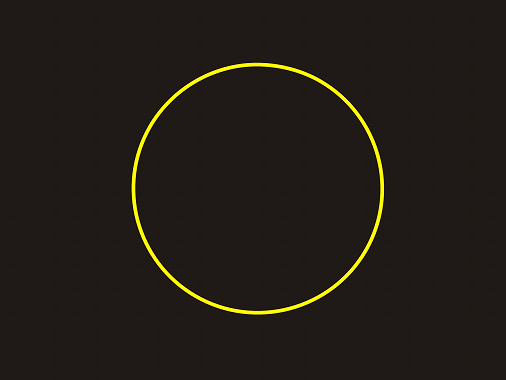
- or it may sweep out a continuous disc-shaped area:
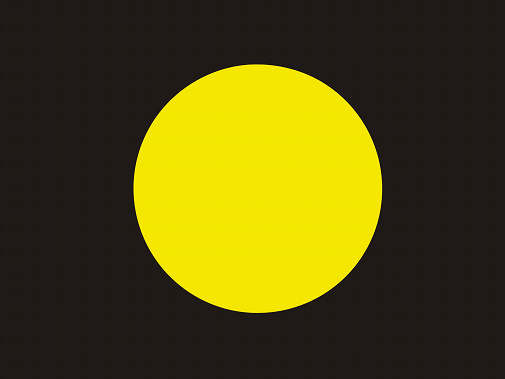
or a series of positions of the line:
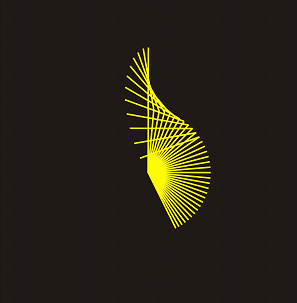
If two generating lines form a linkage, their movements form other shapes:
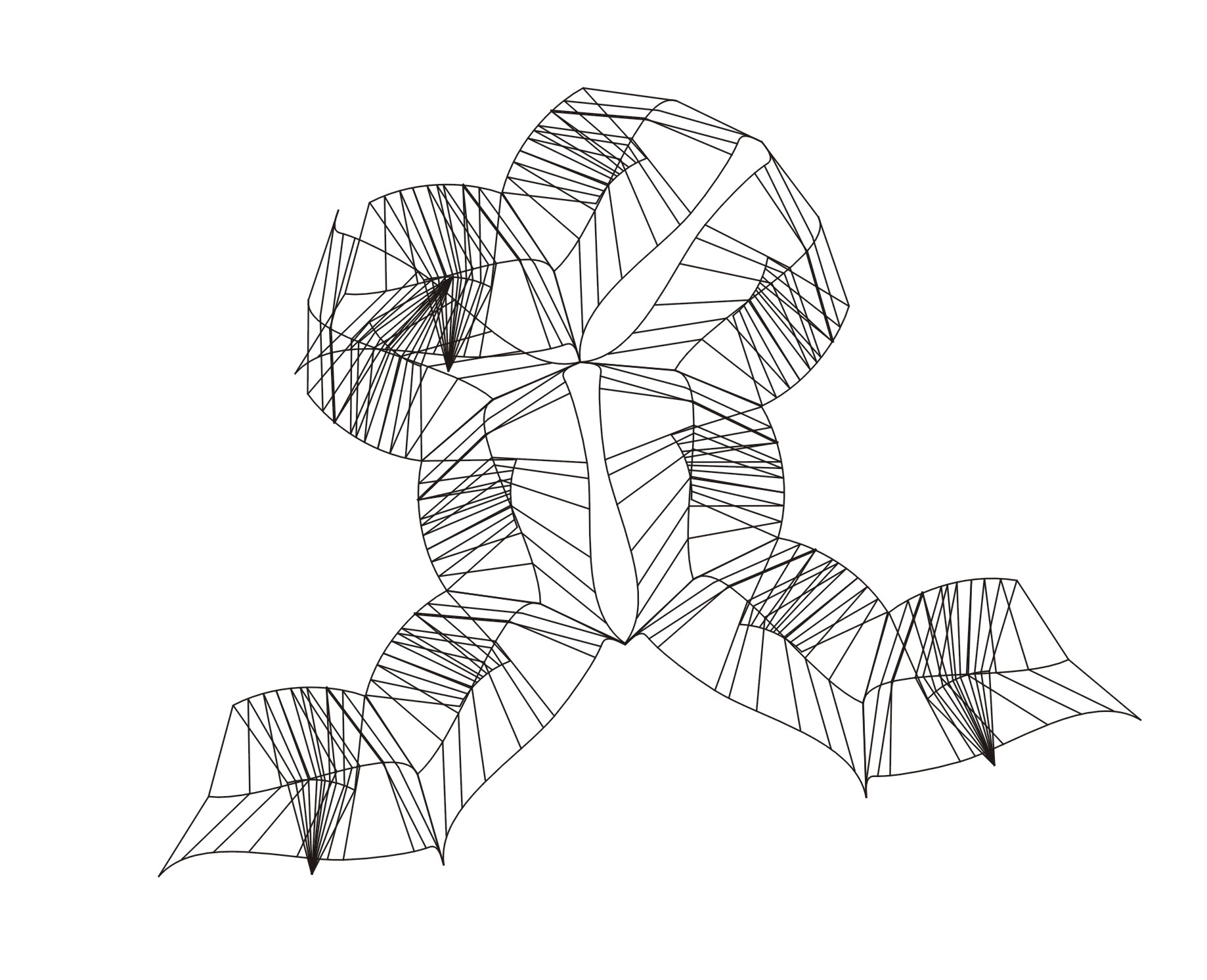
From mouth-spraying of natural pigments on cave walls, to studio painting with oil or acrylic colours, visual thought has always been expressed through the use of technologies current in a given period. Today we can use computers to execute pictures. But pictures are still made out of shapes, and that is so whatever the materials and technical methods we use.
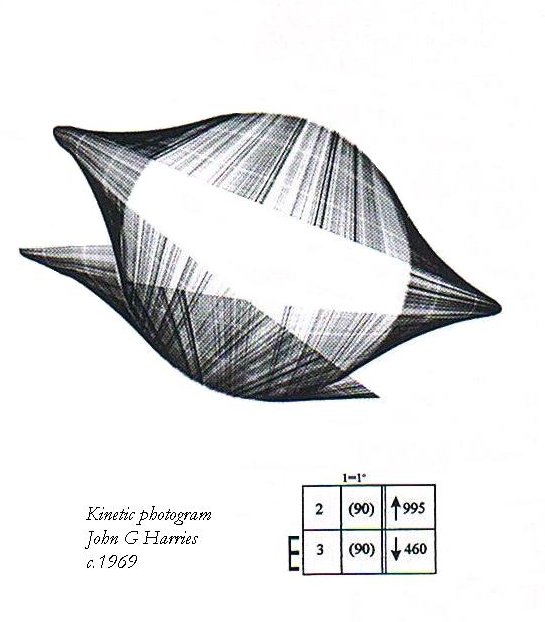
See examples of videos composed in Eshkol-Wachman Movement Notation, in which sequences of movement generate interrelated shapes.